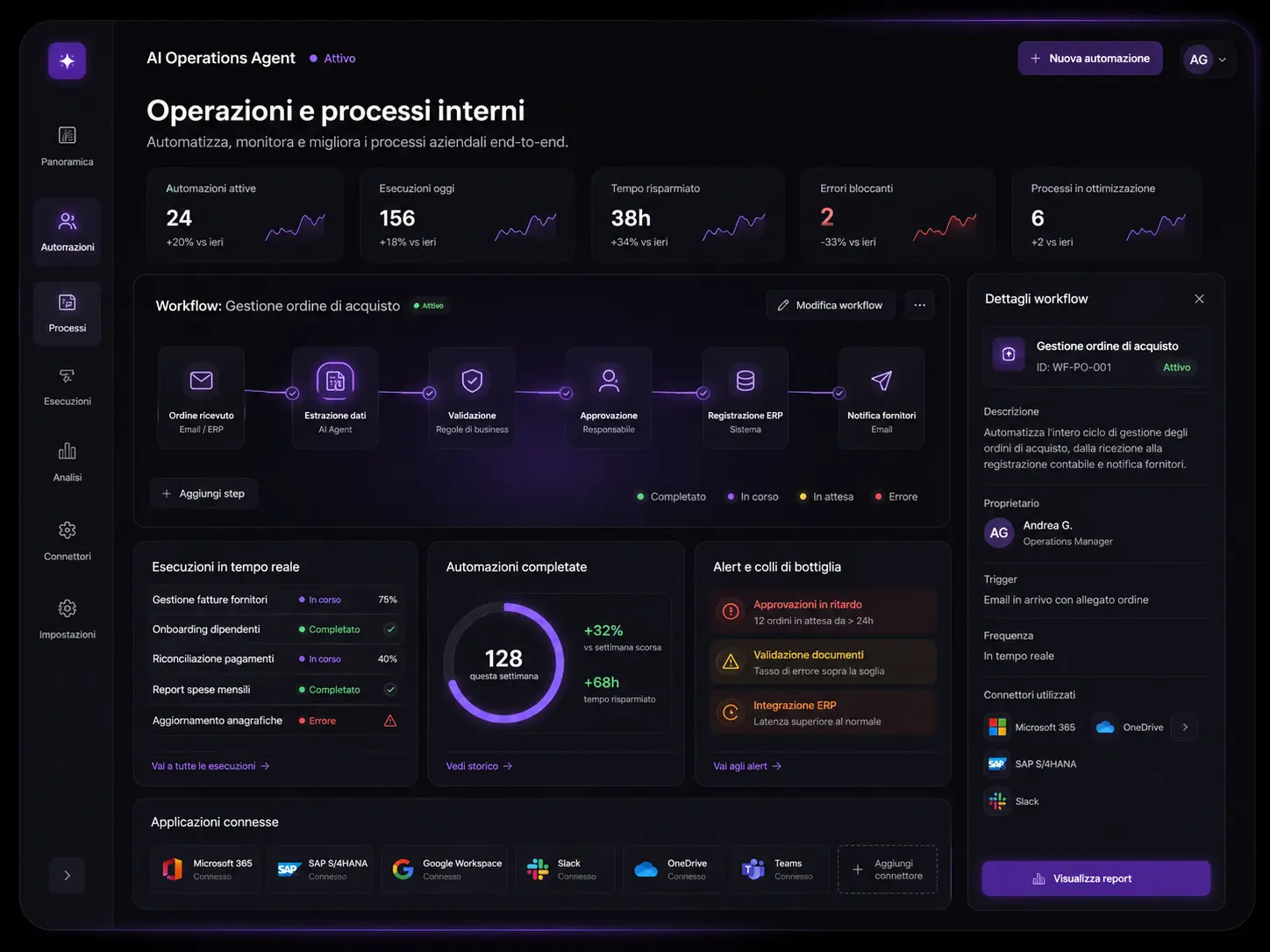
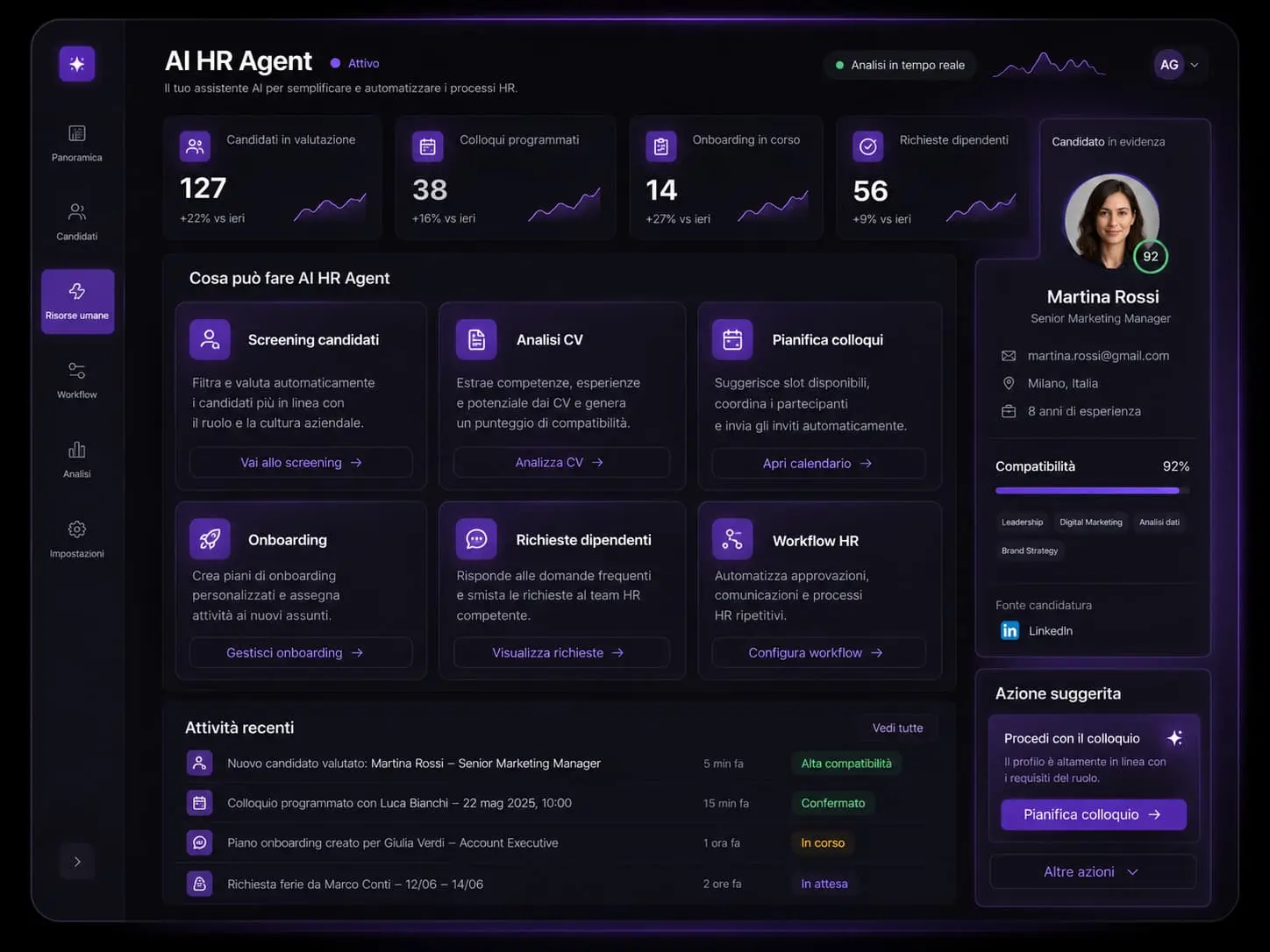
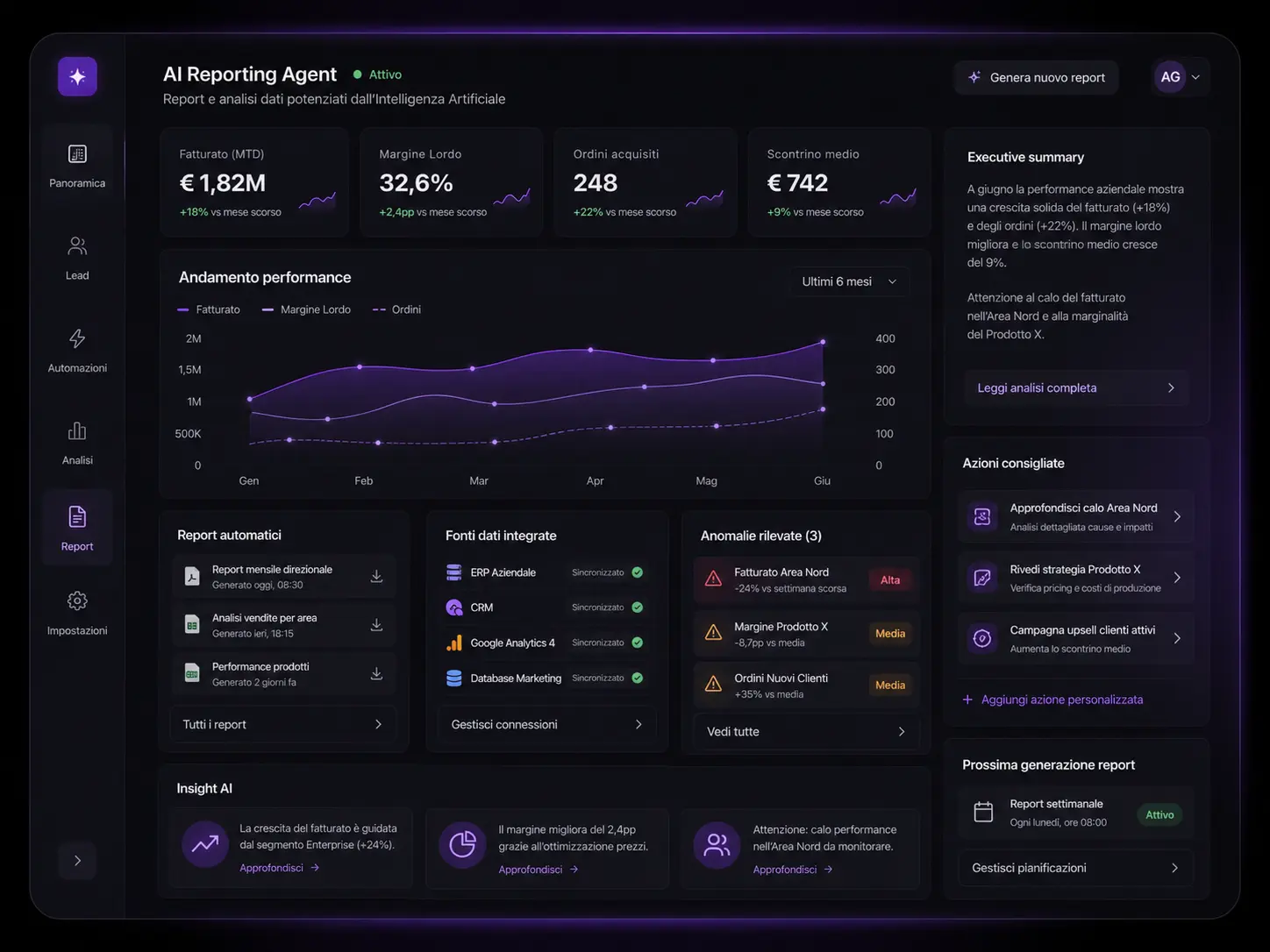
It can qualify incoming requests, look up information in authorised documents, draft quotes, route requests, check data and produce reports. The scope depends on the process, the sources and the actions allowed: an agent doesn't get unrestricted access to company systems.
Frequently Asked Questions
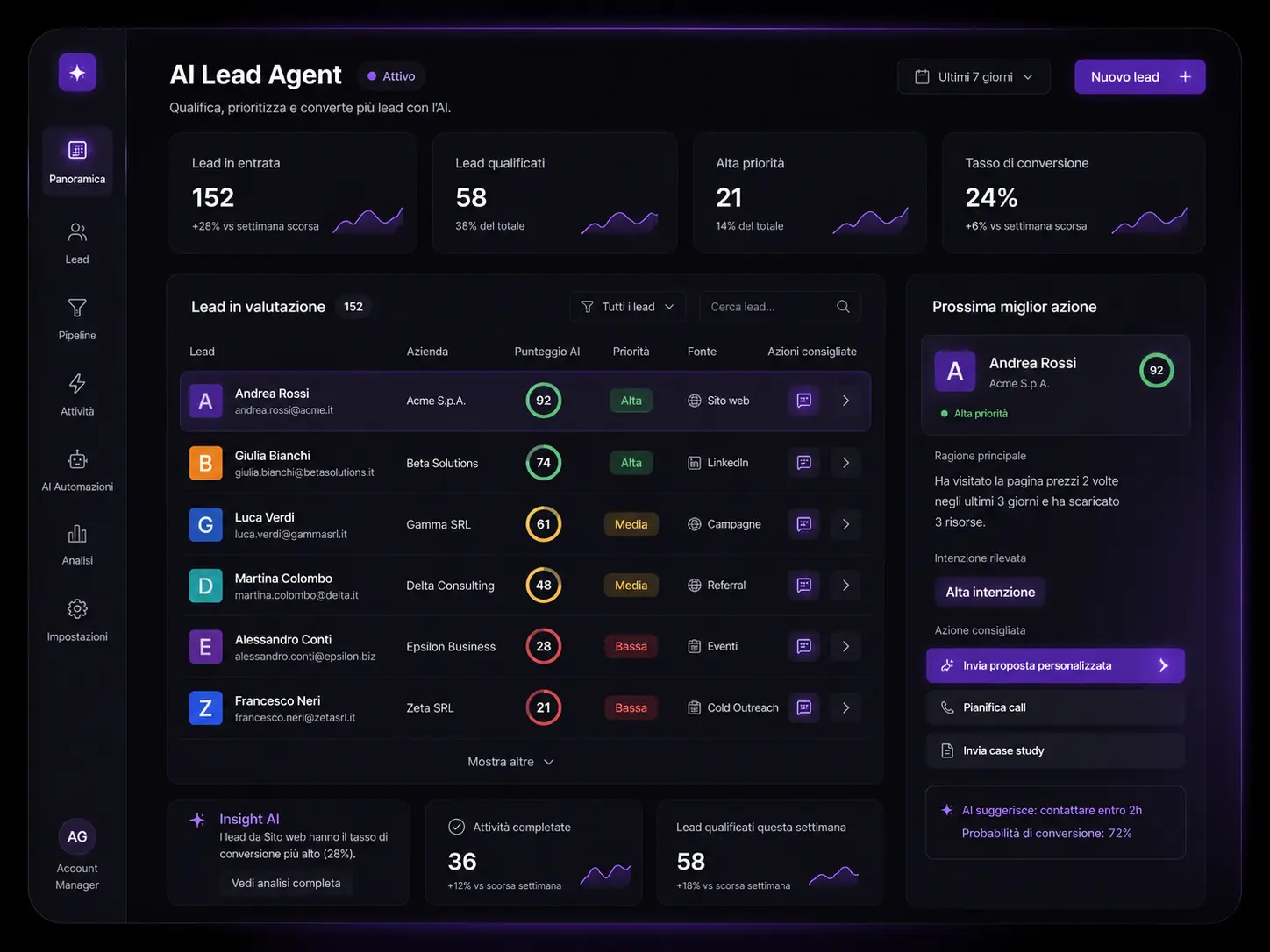
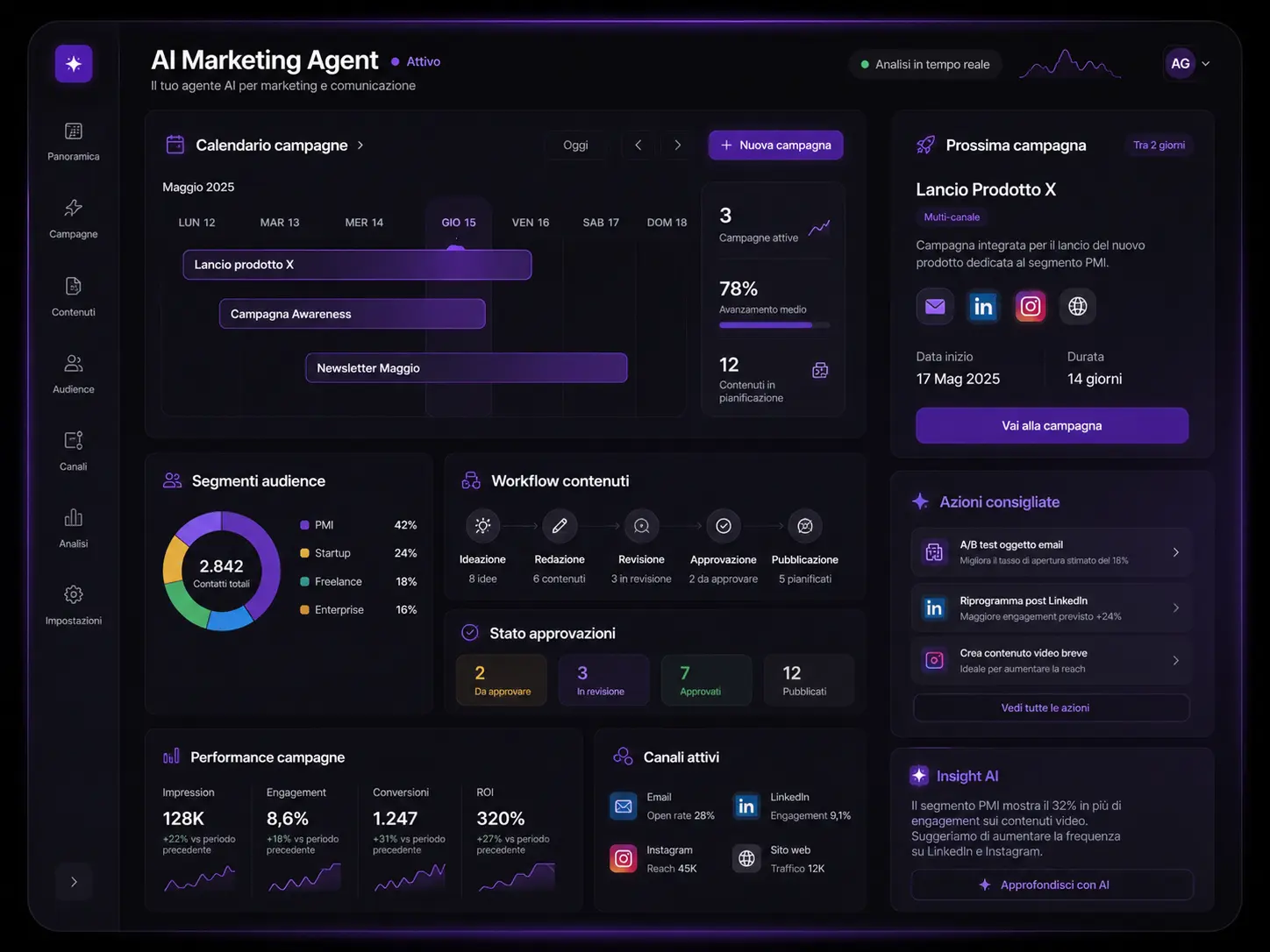
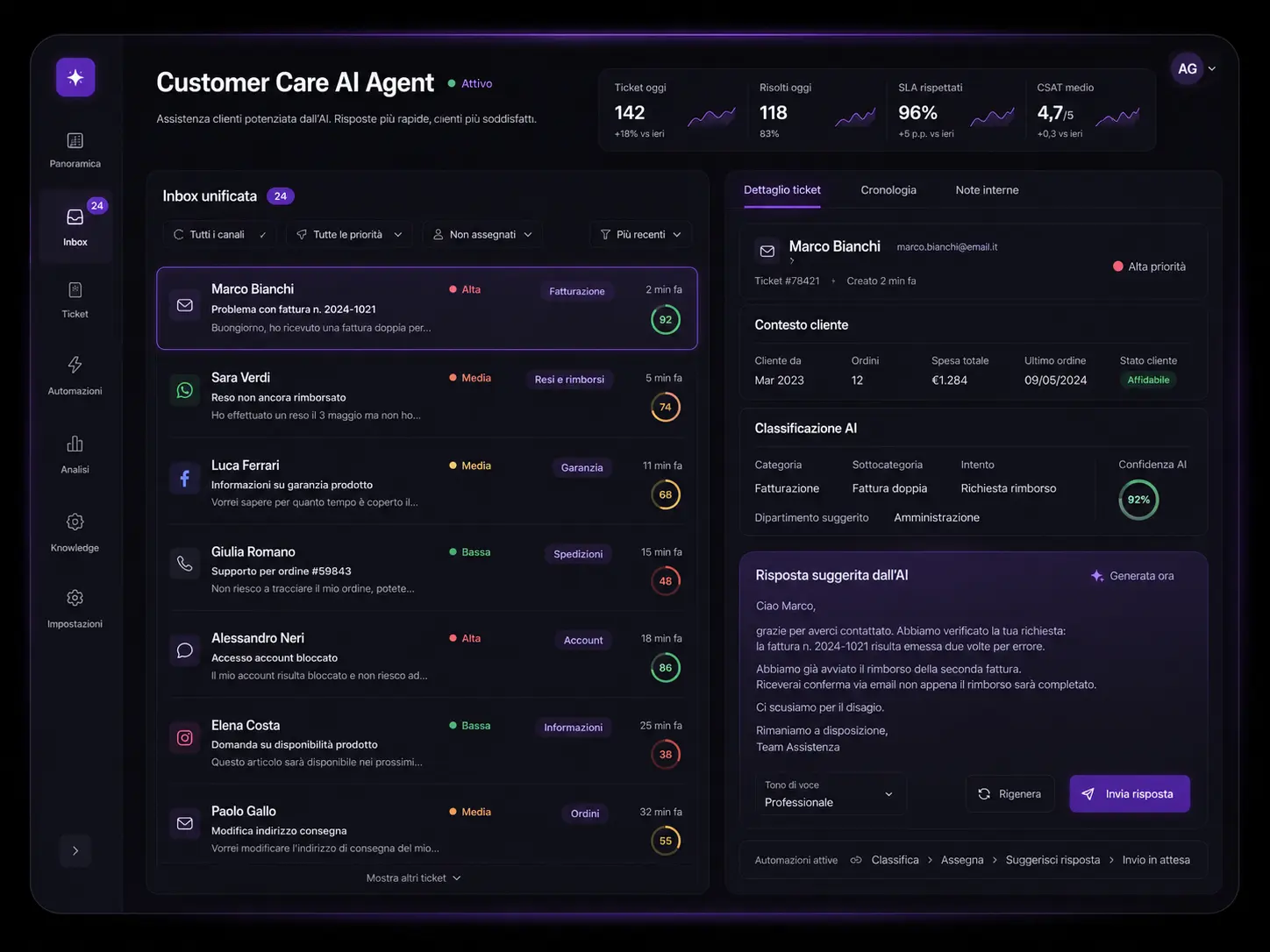
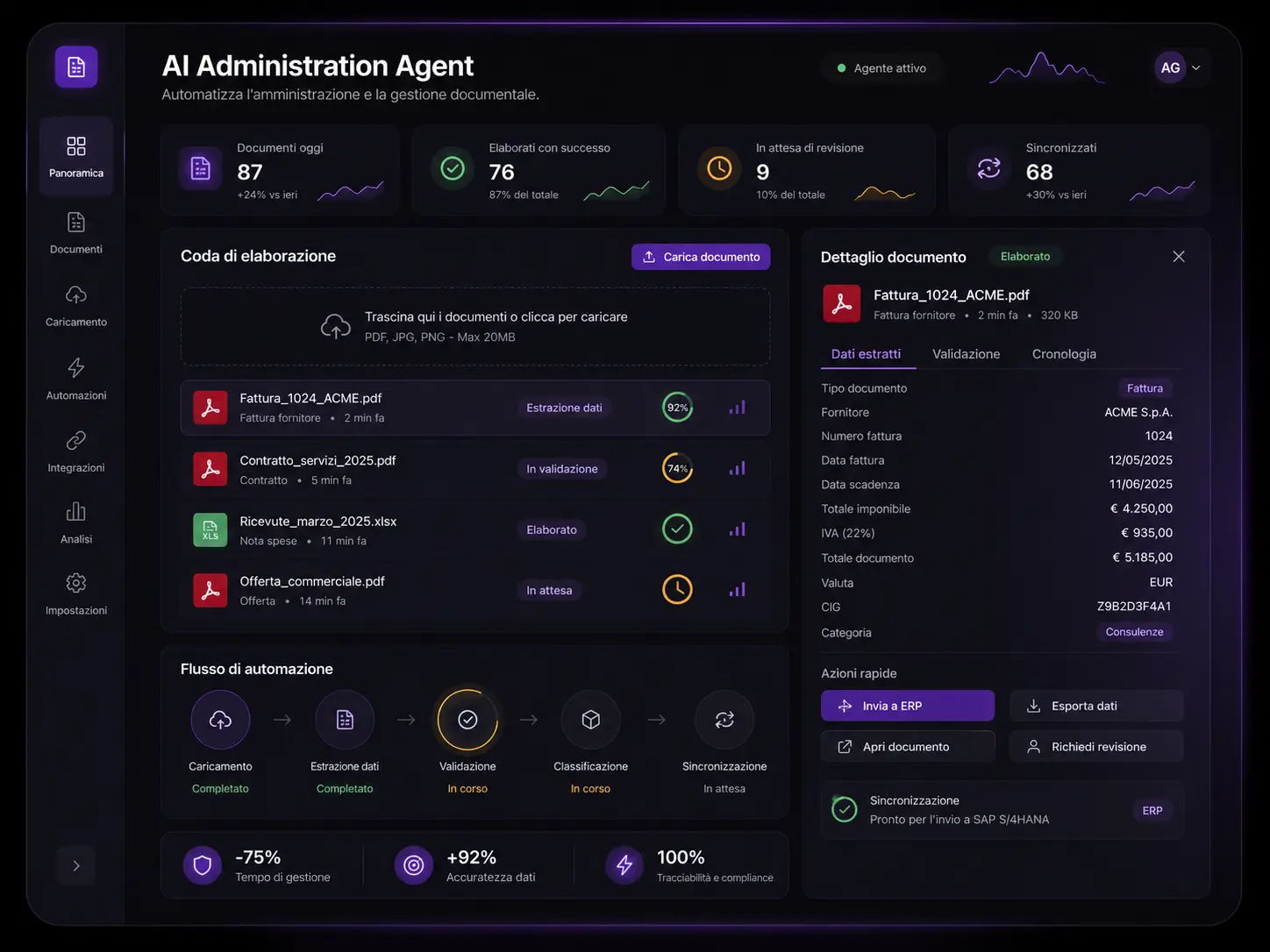
In sales it can sort and enrich leads; in customer service it can answer using company knowledge; in administration it can read and classify documents; in operations it can check steps and anomalies; in marketing it can prepare analyses and variants for approval. These examples are turned into real workflows, not a generic demo.
Yes. It can support content inventory and analysis, information structure, research, component development, testing, technical SEO, personalisation and monitoring. Architecture, design, production code and publishing remain in the hands of professionals, with checks, backups and approvals.
Only within defined rules. Data, goals, sources, permissions and approval thresholds are set in advance; sensitive actions stay with a person. Logs, checks and the ability to stop or correct the flow keep the automation under control.
Depending on the APIs and permissions available, it can work with the website, CRM, email, documents, e-commerce, analytics and compatible business software. Before integrating, we check data quality, privacy, responsibilities and what happens when something goes wrong.
It depends on how complex the process is, the quality of the sources, the integrations and the level of autonomy. We start with a concrete mapping, then a tightly scoped prototype and realistic tests; only on that basis do we define timelines, development costs and model usage costs.